Omniframe

2023 - 2025

Overview

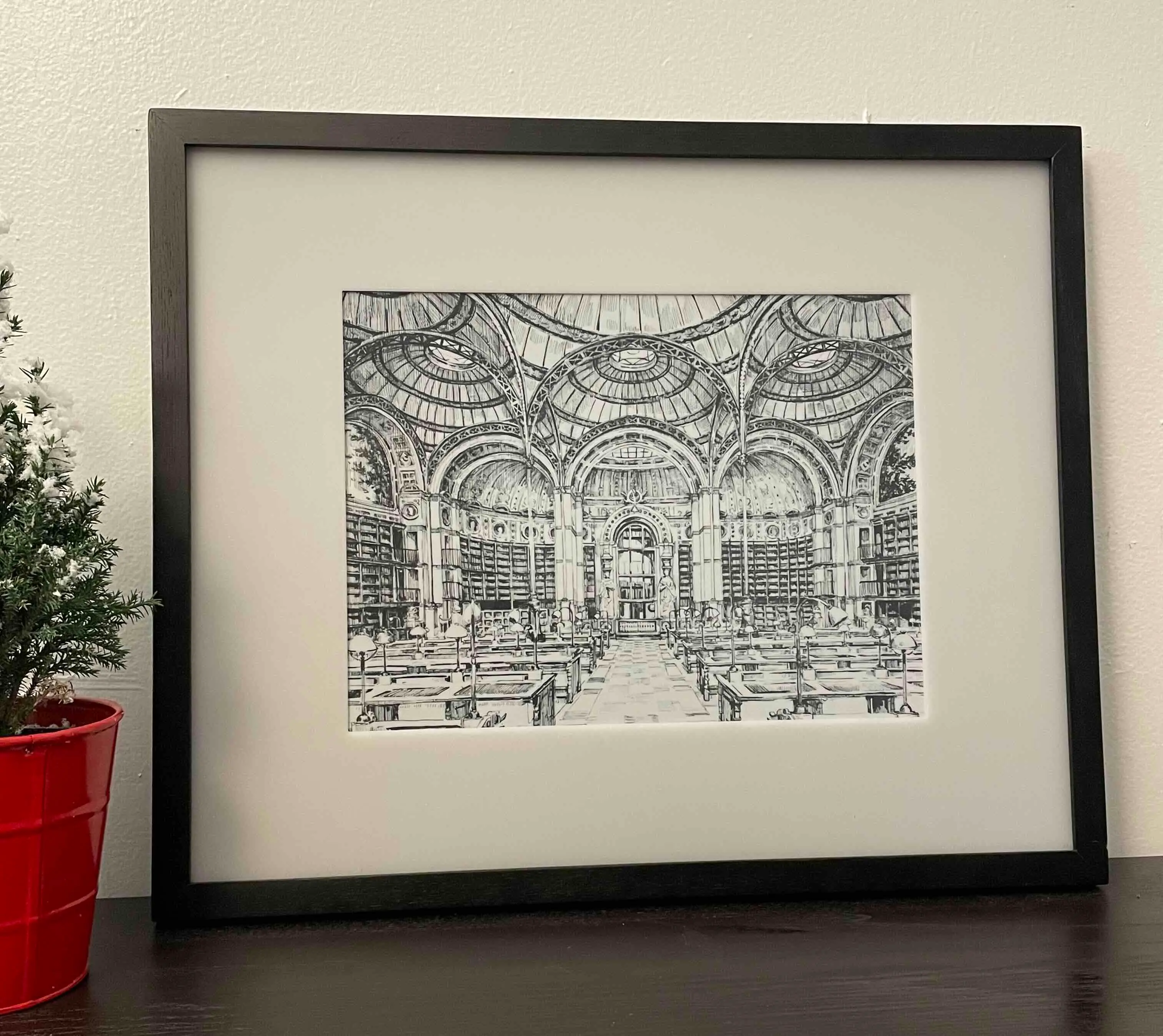
Omniframe

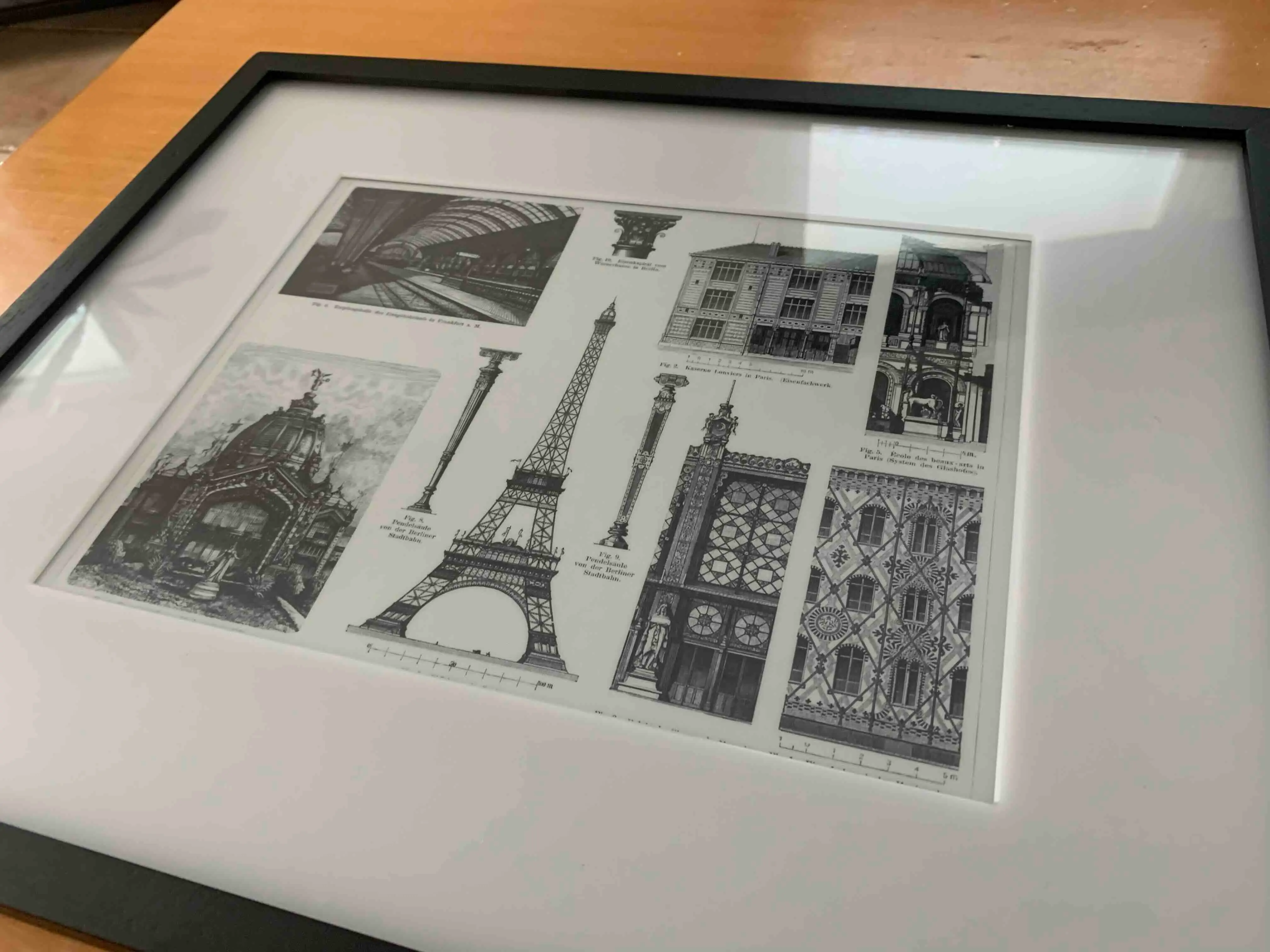
I started building this e-ink frame back when there were almost no such products in the market and no open-source designs available. E-ink uses very little power so I wanted to challenge myself by developing a solar charging system into the frame in a way that is invisible to the user. The power architecture is the most advanced one in the whole field, and it makes this one of the few energy-independent consumer electronics devices in the world.

Technology

Embedded Systems PCB Design ESP32-S3 E-Ink Solar Cell Design Power Delivery Design IoT Altium Designer KiCad Fusion 360 Blender DFM DFA Injection Molding Resin Printing CNC Embedded C ESP Wifi & BLE Display Driver Development Waveform Development Image Processing Pillow AWS Full Stack Development

Hardware

Omniframe system diagram
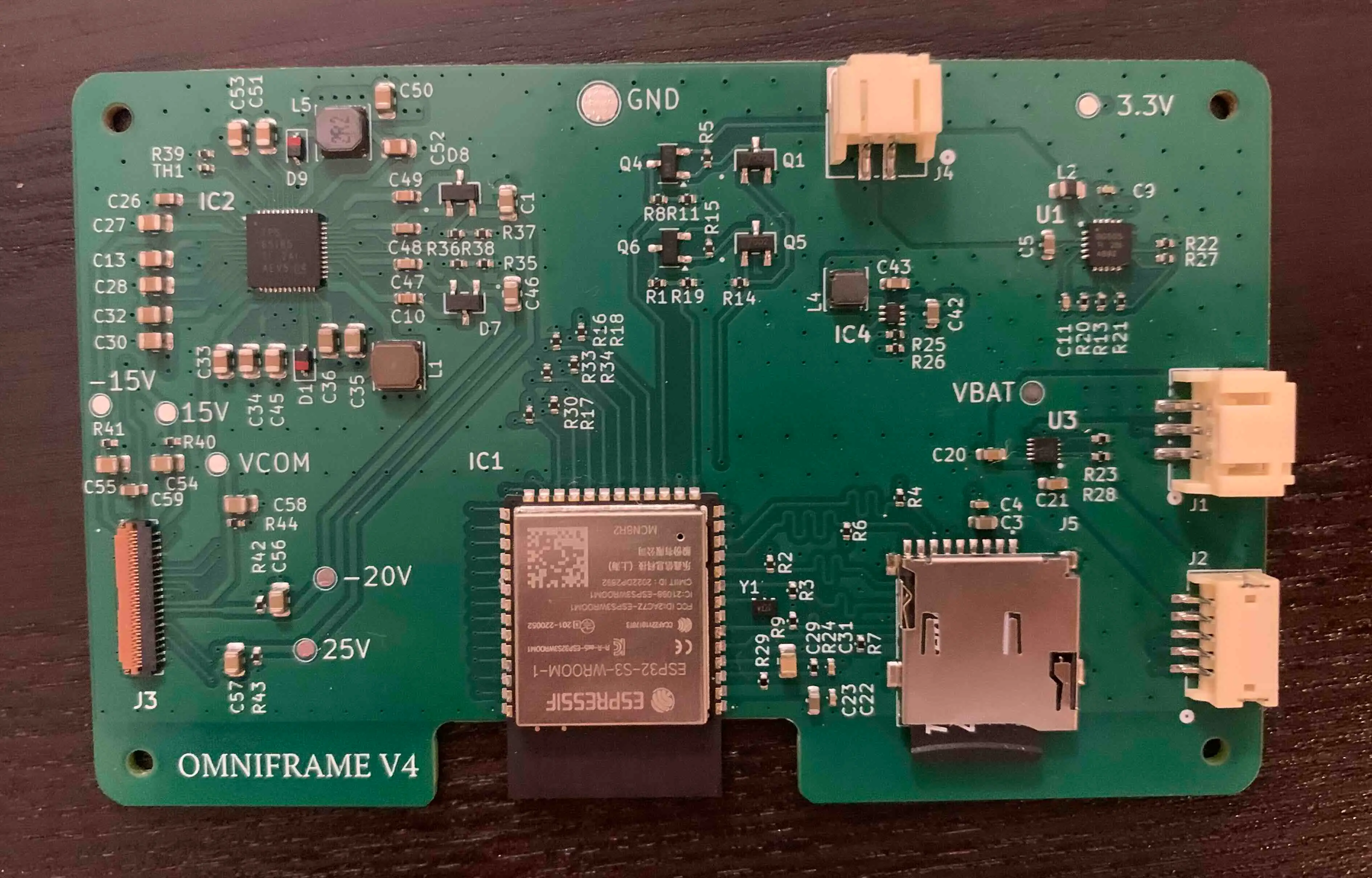
Omniframe v4 board
Omniframe main schematic
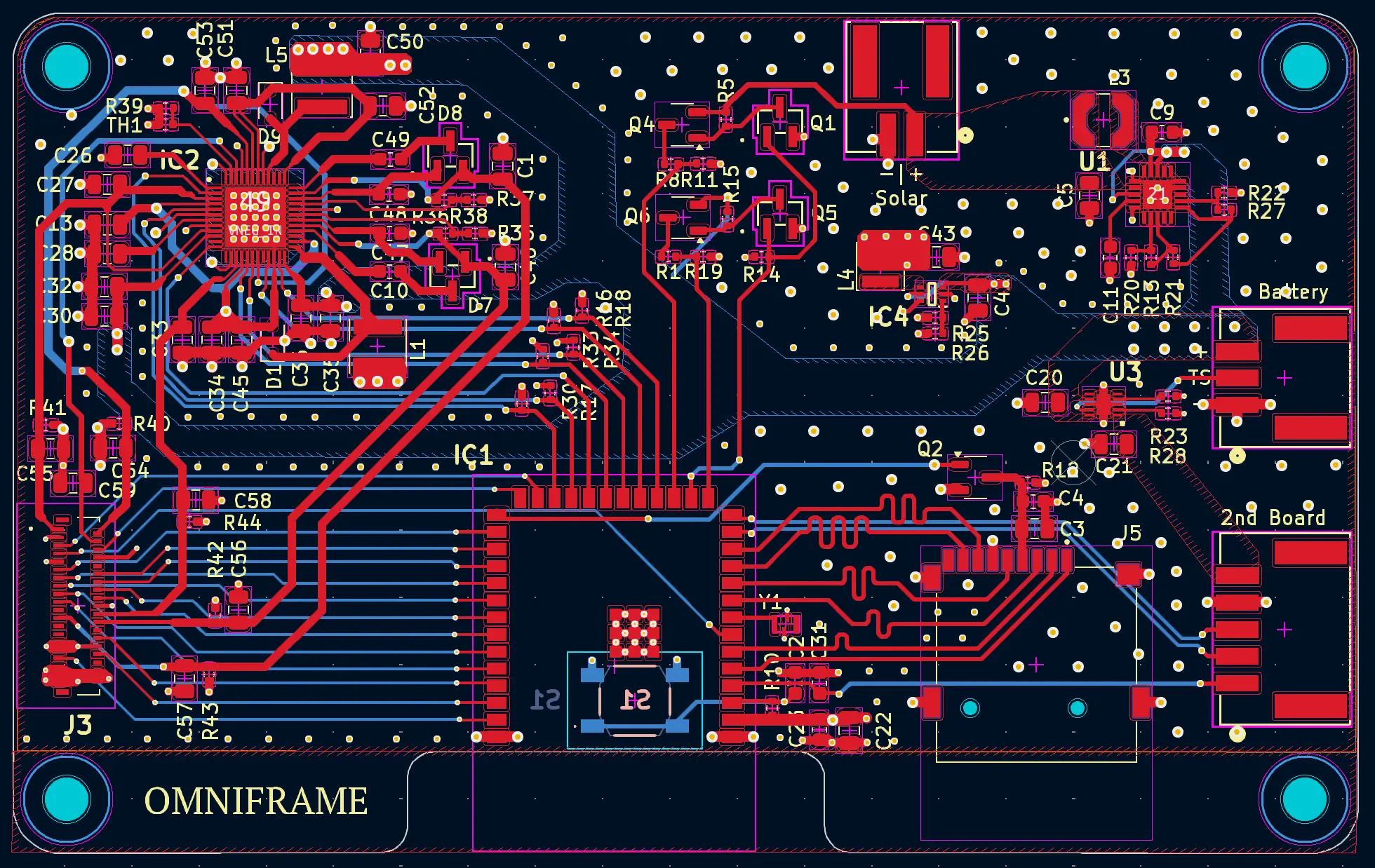
Omniframe final board layout

Materials

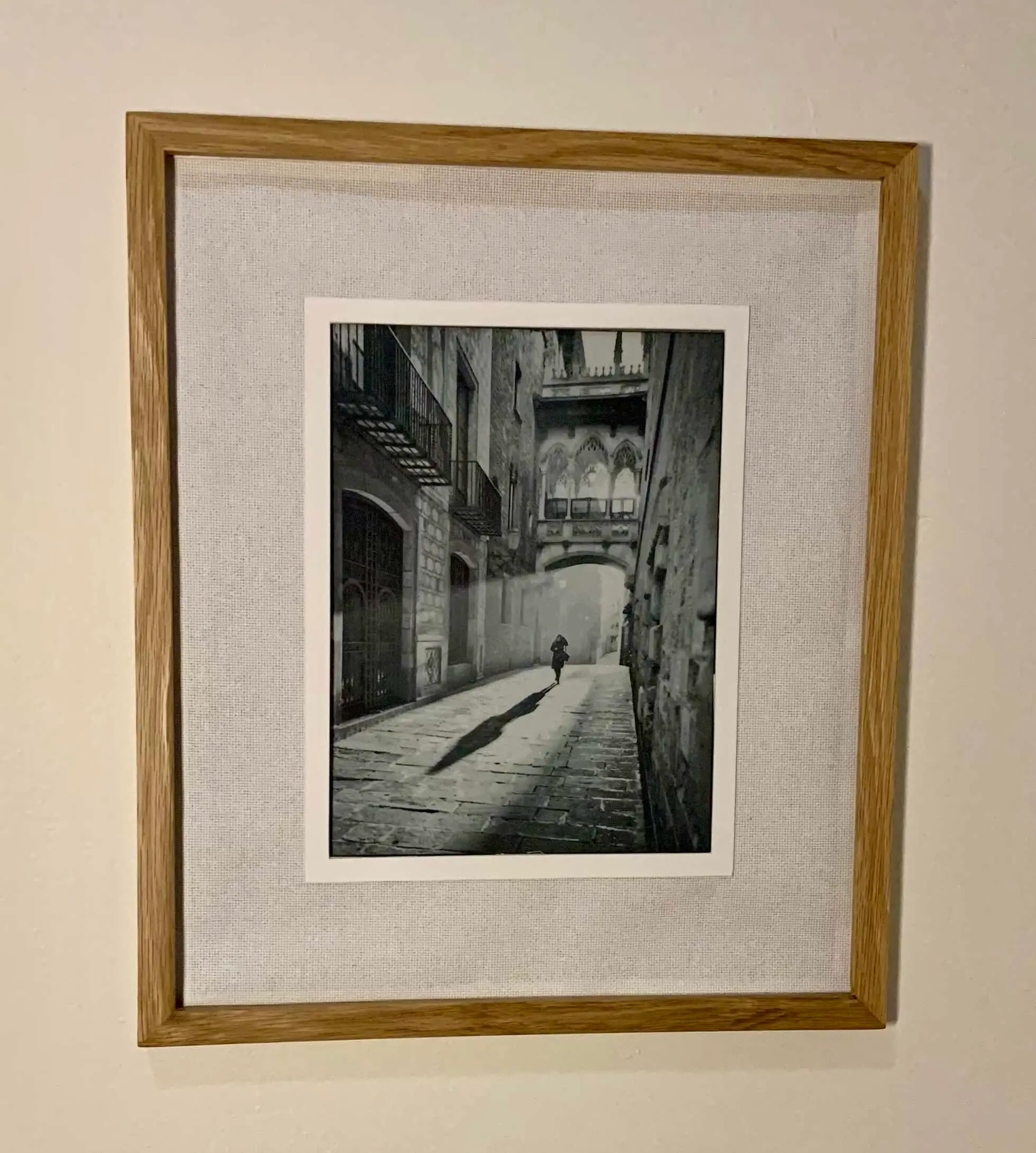
Omniframe frame
Omniframe backboard
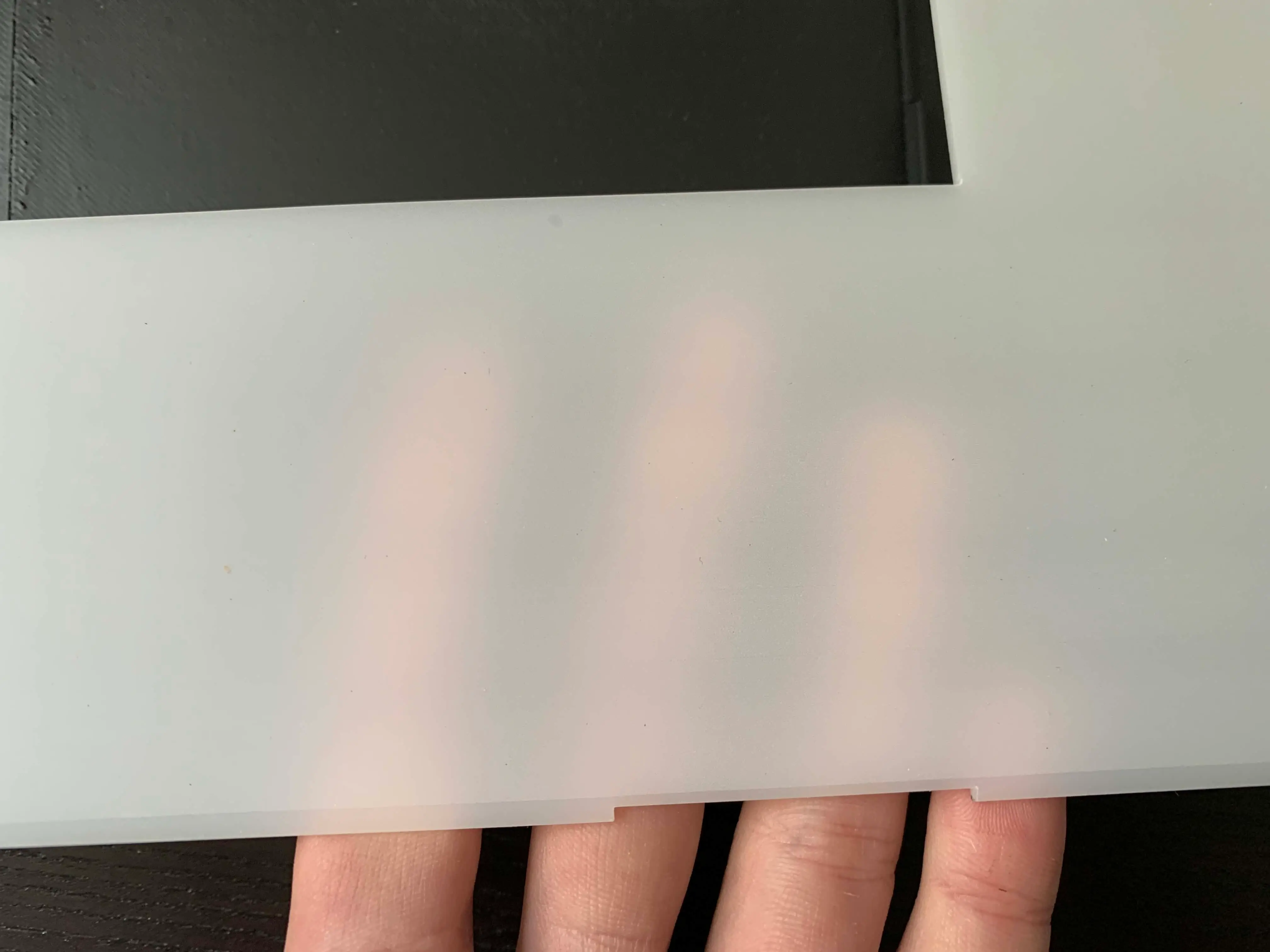
Omniframe diffuser

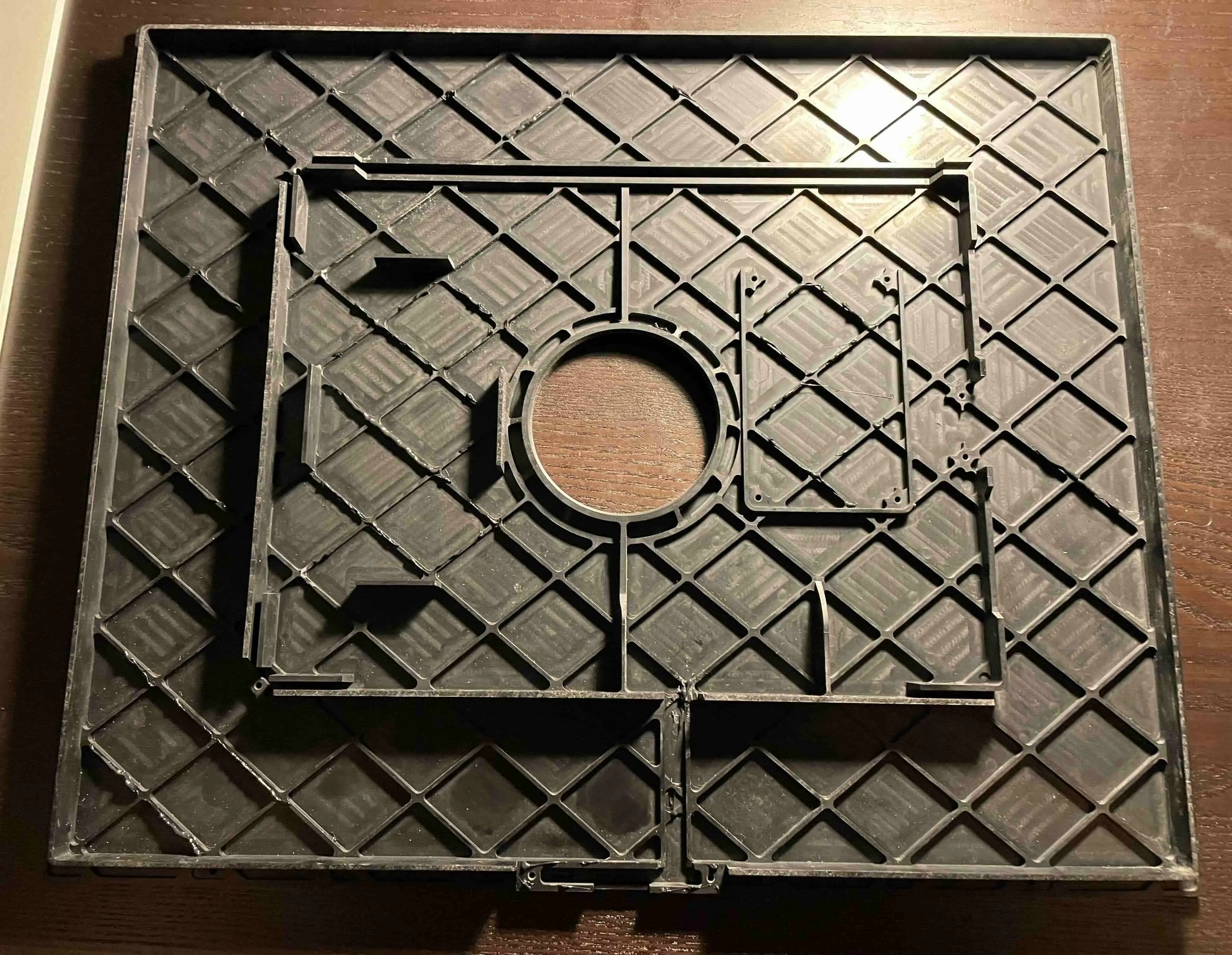
The frame is CNC machined from acacia wood. The backboard for V3 was resin-printed, while V4's backboard was CNC machined from ABS to develop it closer toward injection molding. The diffuser is 60% translucent and coated with a diffusing spray to hide the solar cells while allowing sufficient light transmission to continuously charge the device.

Specifications

Display

  • Size: 13.3 inches (27 x 20 cm)
  • Resolution: 1600 x 1200 pixels
  • Grayscale Depth: 256 shades

Frame

  • Measurements: 17 x 14 inches (44 x 36 cm)
  • Material: Acacia hardwood
  • Mounting: Rotating wall mount

Energy

  • Battery Capacity: 12,000 mAh
  • Battery Life: Over 1 year
  • Charging Port: USB-C

Other Features

  • Connectivity: Wi-Fi and Bluetooth LE
  • Internal Storage: 4 GB
  • Buttons: Sync and Reset

Process

V1

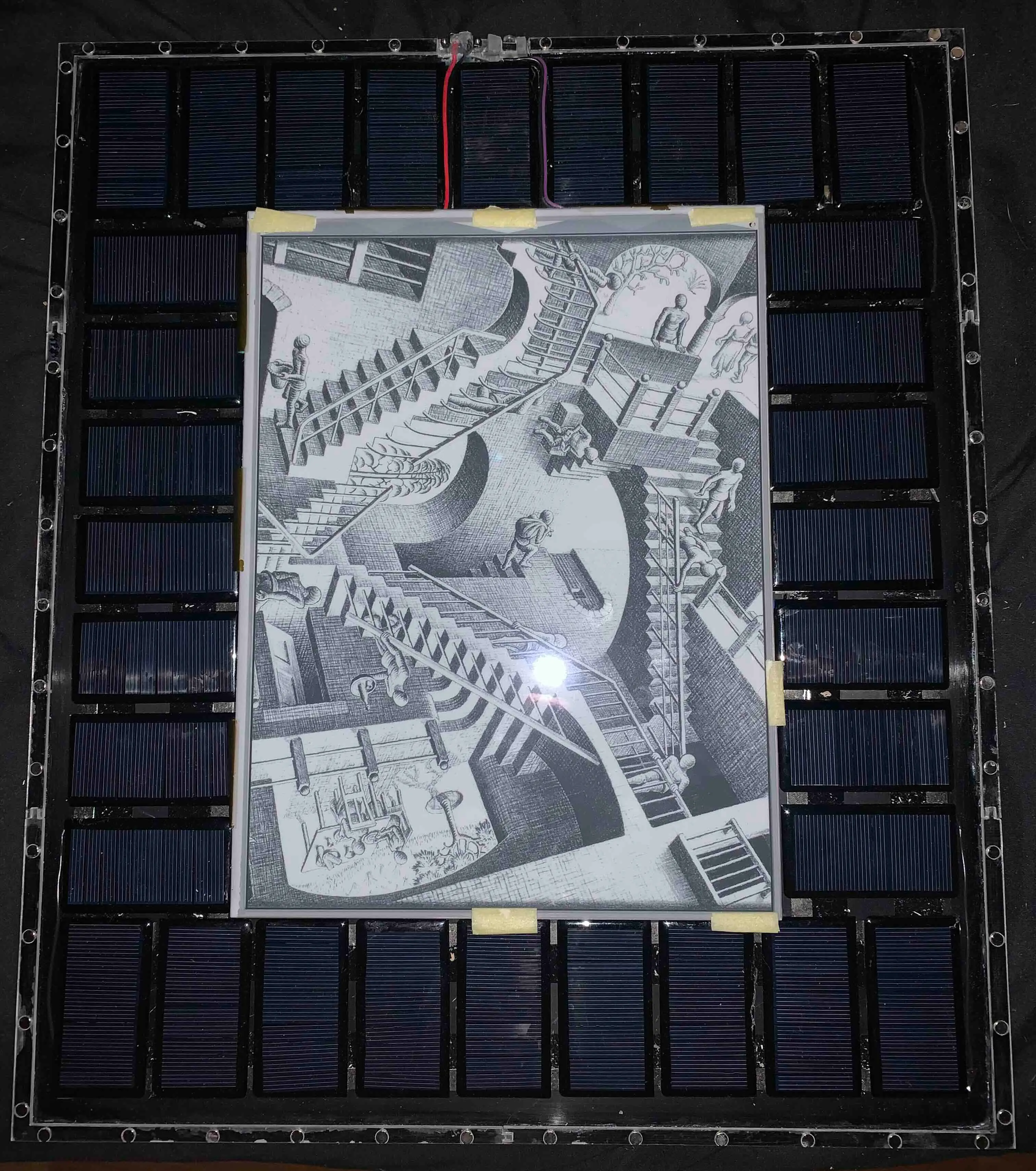
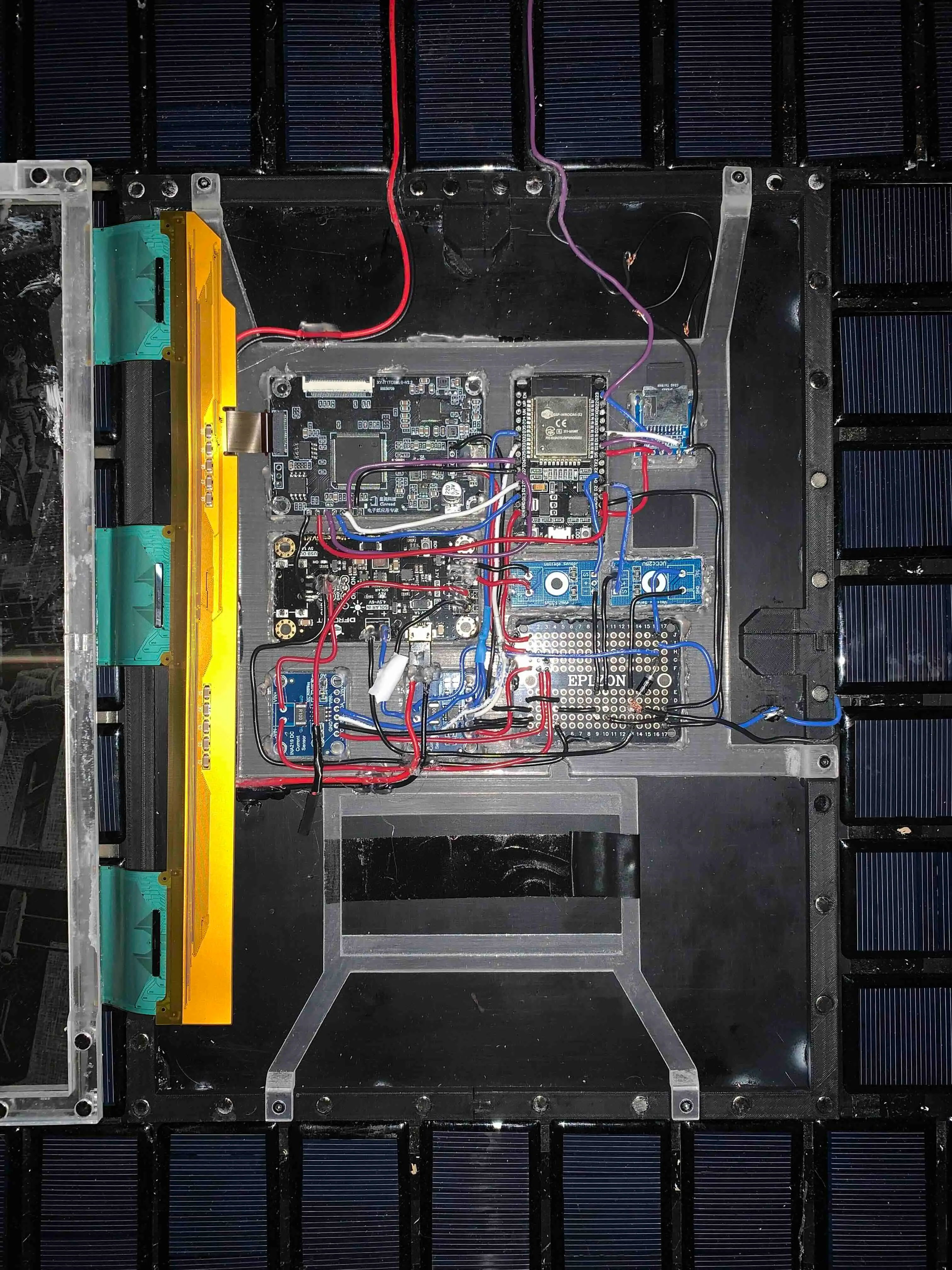
The first version was done with an acrylic backplate and different boards soldered together on a resin printed holder and had individual solar cells soldered together on nickel strips.

Omniframe v1
Omniframe v1 inside
Omniframe v1 hardware

V2

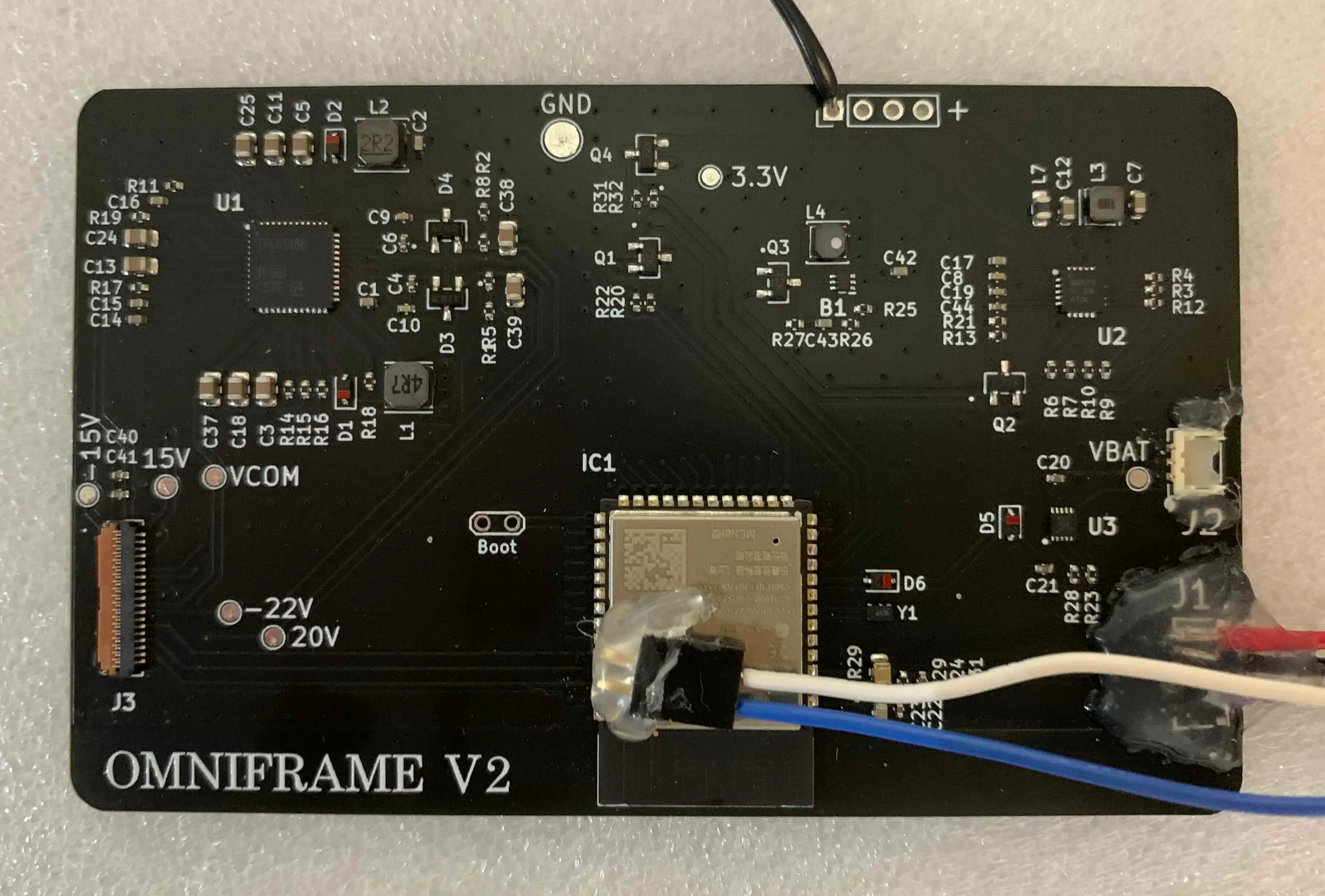
The form factor turned closer to the final product, and had a better diffuser made from special coated translucent acrylic. And second-generation custom PCB that skipped the display driver IC that the first generation had and instead used low-level driver firmware to drive the display directly with the ESP.

Omniframe v2 hardware

V3 & V4

Omniframe v3 drawing

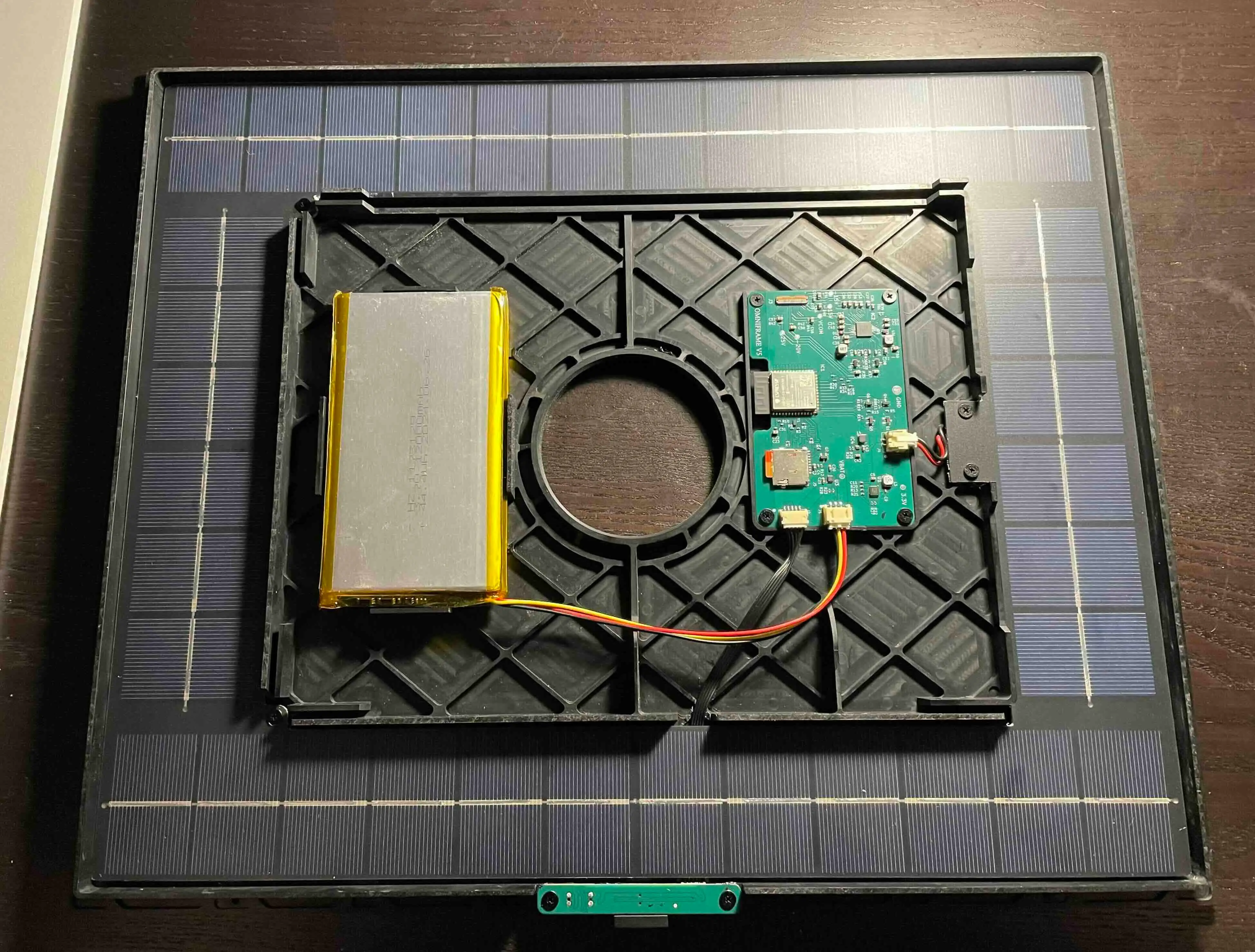
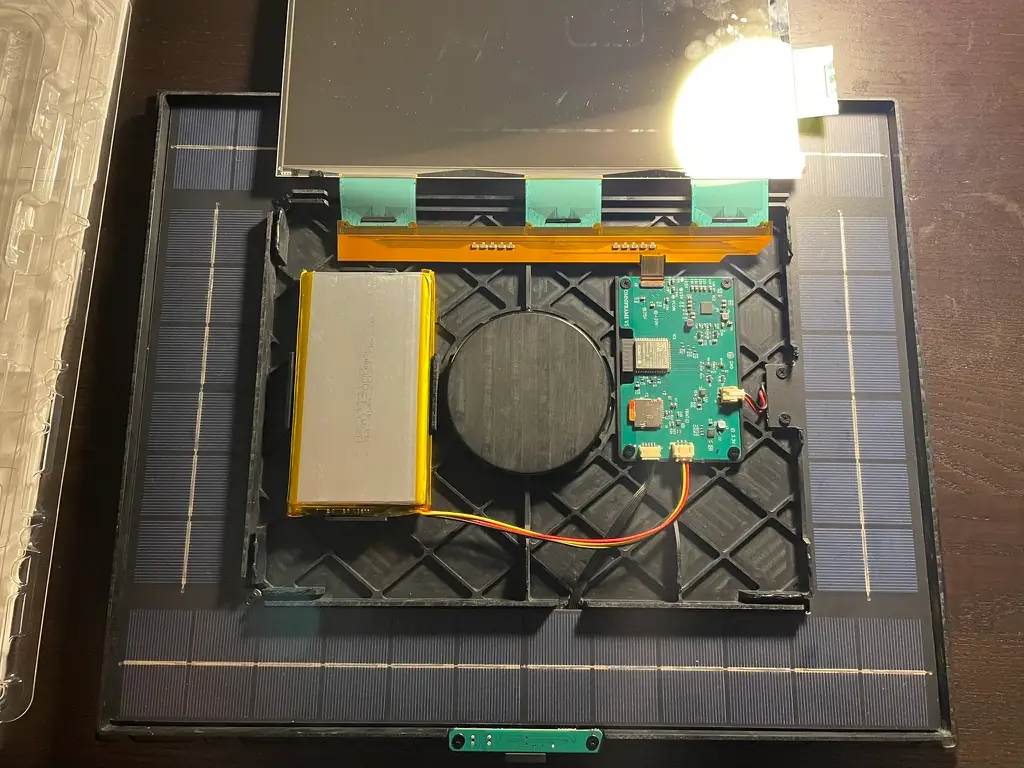
DFM and DFA were the major focuses of V3 and V4. The total number of components was significantly reduced and the backboard was designed for injection molding. The hardware assembly featured a unified solar cell, an improved main logic board with refined power architecture, production opimizations, and SD card holder, and a secondary board with button and USB-C port, connected via ribbon cable.

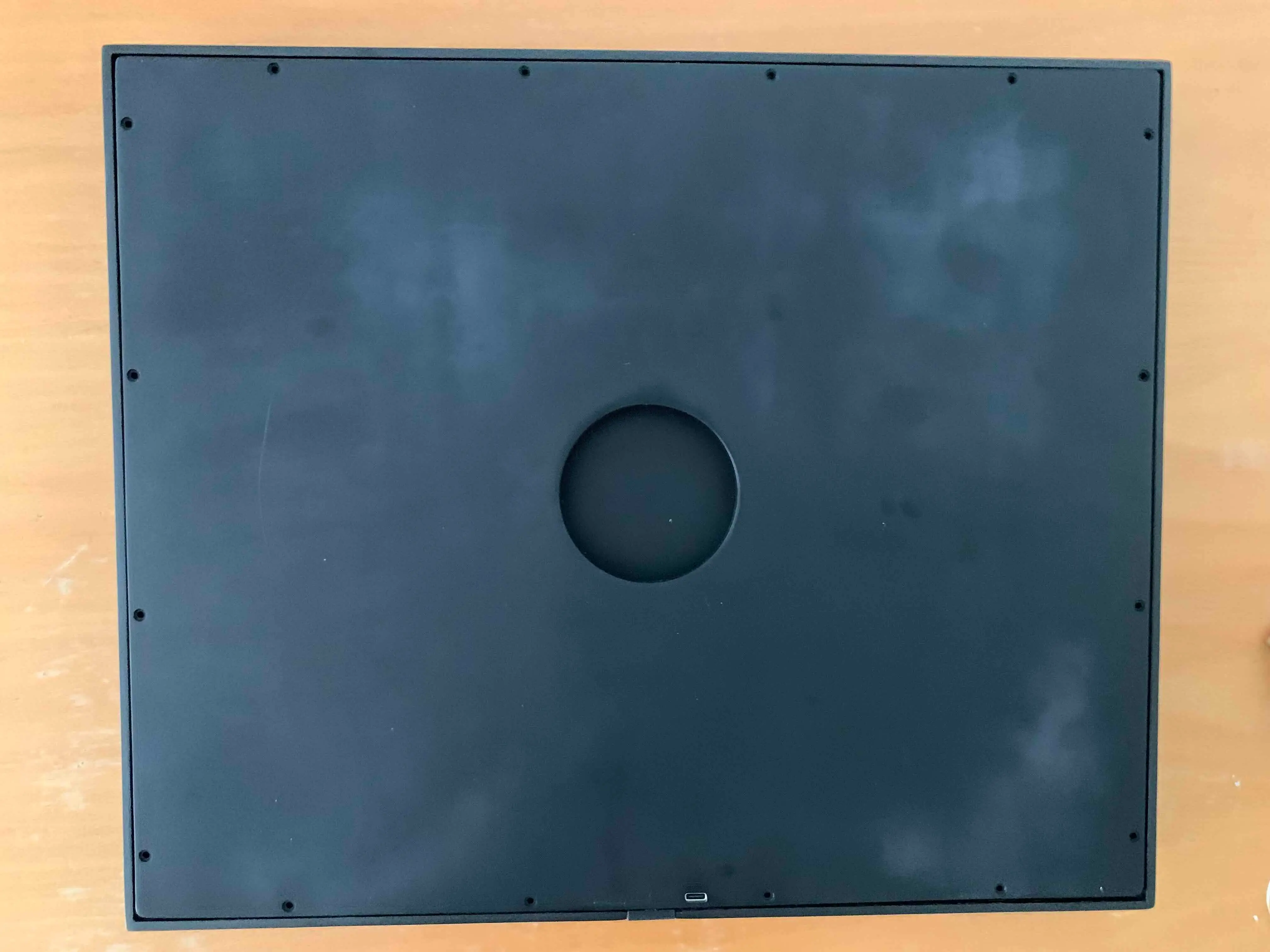
Omniframe v4 backboard
Omniframe v4 hardware assembly